
What is ChatSpecies?
ChatSpecies is an AI-powered chatbot designed to foster deeper connections between humans and biodiversity through a species-first perspective. By leveraging playful and interactive design, it encourages users to learn about local ecosystems while promoting pro-environmental behaviors.
Unlike traditional digital approaches to ecological education, which often fail to create lasting emotional ties with nature, ChatSpecies integrates artificial intelligence to enhance engagement and empathy. Its design highlights three core design principles: the importance of fact-checking for trust and transparency, the role of playful elements in effective learning, and the significance of sympathetic mentality in fostering emotional connections with species.
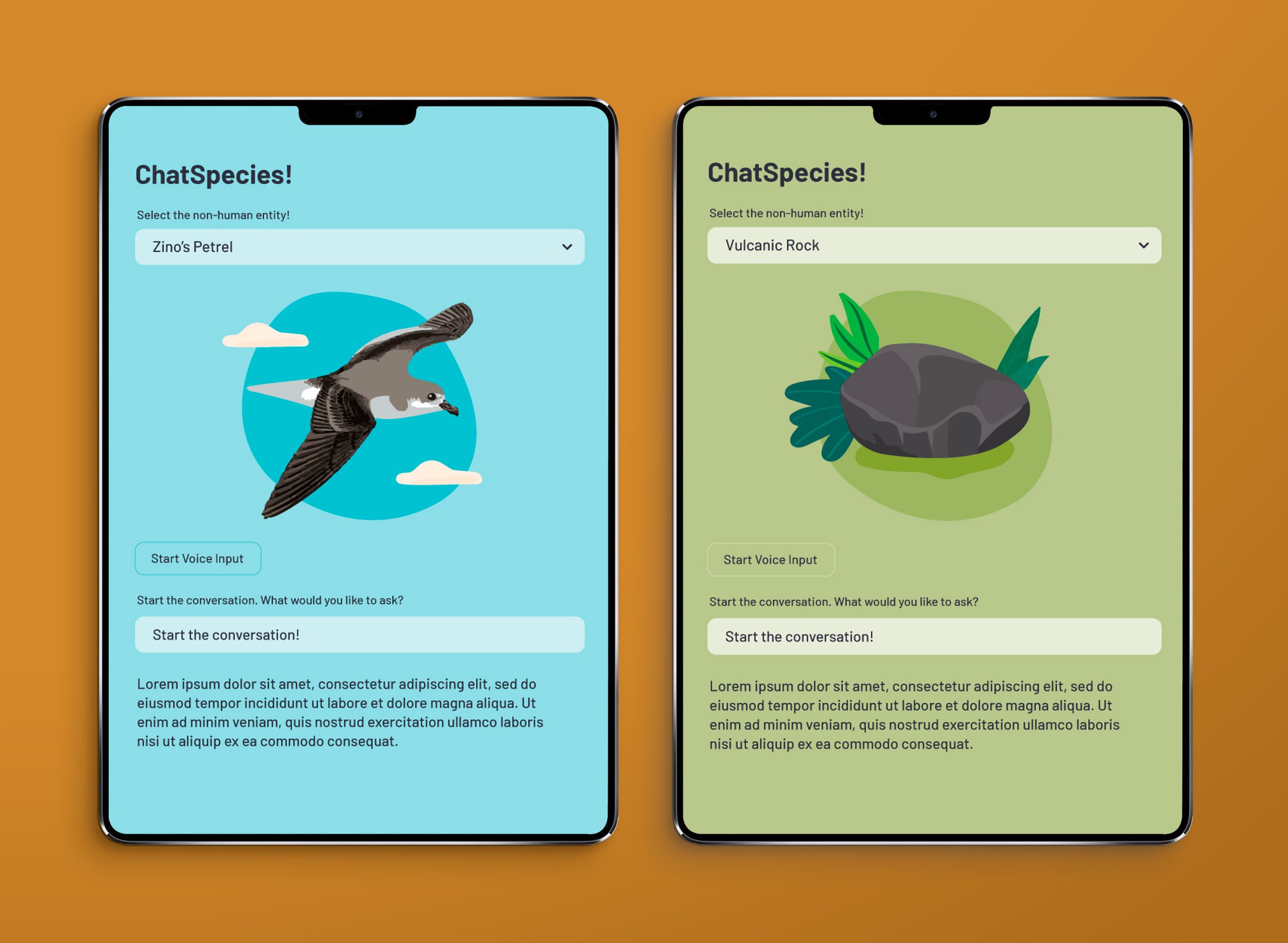
Figure 1: Mockup of ChatSpecies conversations on a hand-held tablet.
ChatSpecies in Case Study 3
ChatSpecies offers significant potential for the LoGaCulture project, particularly in fostering engagement with cultural and ecological narratives through conversational AI. The system’s ability to build trust through fact-checking, facilitate edutainment, and incorporate empathetic design principles aligns well with LoGaCulture’s objectives, particularly as leveraging RAG methodologies ensure that ChatSpecies’ knowledge base remains accurate, transparent, and traceable — critical features when dealing with cultural heritage and ecological information that require high levels of credibility and sensitivity.
One of the primary strengths of ChatSpecies for LoGaCulture lies in its capacity for step-by-step learning and trust-building. Through the integration of fact-checking mechanisms and source transparency, the chatbot encourages users to critically engage with information, fostering a deeper understanding rather than passive consumption. This aligns with LoGaCulture’s goal of promoting reflective and informed interactions with cultural and environmental knowledge. Additionally, the option for users to verify responses dynamically supports LoGaCulture’s commitment to maintaining the integrity of historical and ecological narratives within its digital interfaces.
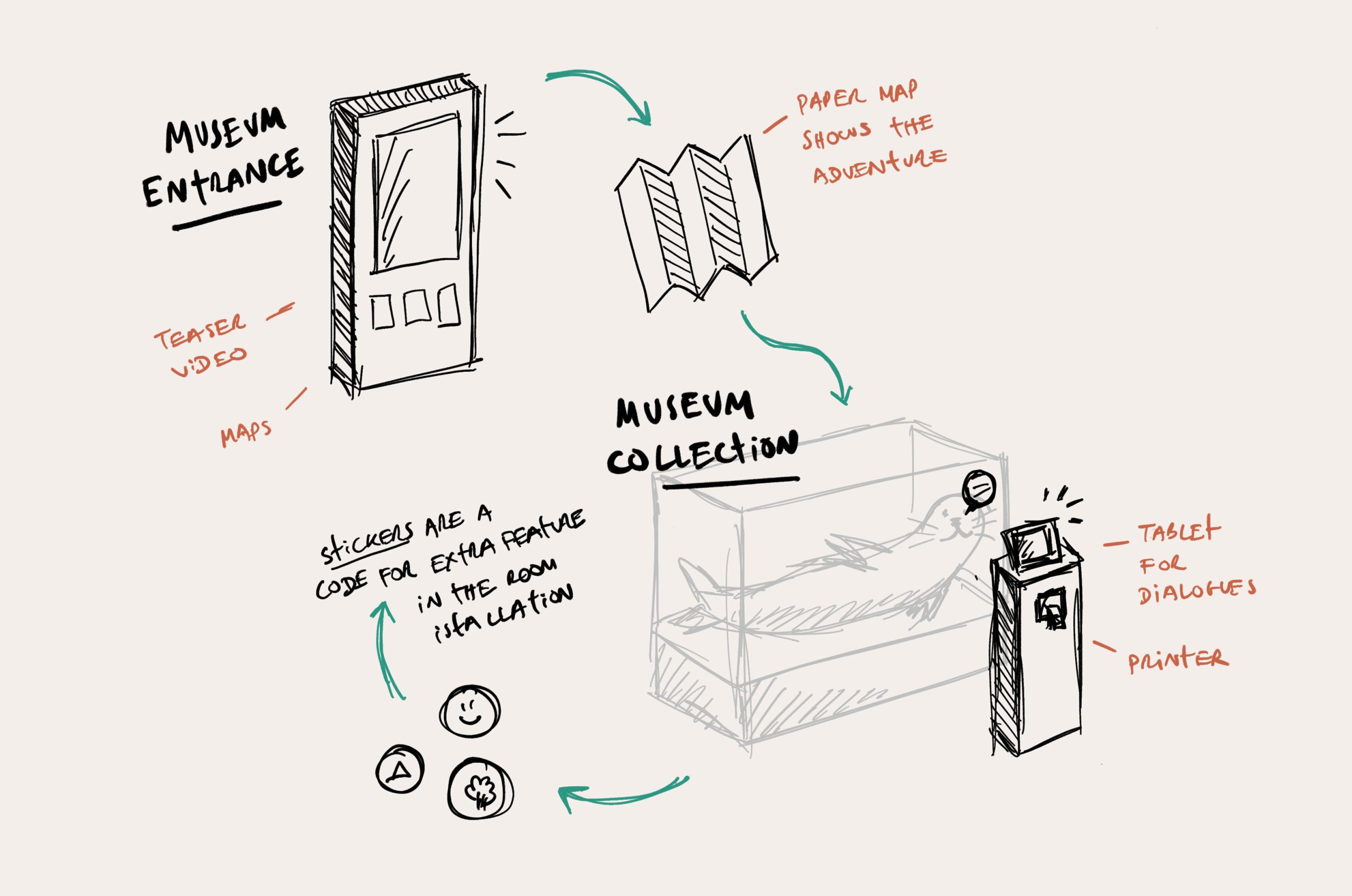
Figure 2: ChatSpecies — as displayed in tablets — in the context of the Funchal Museum of Natural History transmedia journey.
The playful and conversational nature of ChatSpecies further enhances its suitability for LoGaCulture, as museum visitors tend to prefer interactive and gamified elements in chatbot-based learning experiences, which significantly increase their engagement. By adopting a more intuitive and friendly approach to dialogue, ChatSpecies can make complex cultural and ecological knowledge more accessible and memorable to a diverse audience — an approach that resonates with LoGaCulture’s ambition to merge traditional cultural storytelling with digital innovation, ensuring that heritage narratives remain dynamic and relevant.
Empathy-driven AI is another key aspect that strengthens ChatSpecies’ role within LoGaCulture. As our preliminary study has shown (reference below), users responded positively to empathetic interactions, which deepened their emotional connection to the species represented by the chatbot. This concept can be extended within LoGaCulture to create AI personas that embody cultural artifacts, historical figures, or ecological elements, offering users immersive experiences that go beyond informational retrieval. By striking a balance between anthropomorphism and factual integrity, ChatSpecies can encourage users to develop meaningful connections with cultural heritage and natural landscapes, fostering a sense of responsibility and appreciation.
What is unique about ChatSpecies
Retrieval-Augmented Generation-based fact-checking
A key feature of ChatSpecies is its Retrieval-Augmented Generation (RAG)-based fact-checking mechanism, which ensures the accuracy and reliability of the information provided. In scientific and educational settings such as museums, preventing AI hallucinations — misleading or fabricated responses — is crucial for maintaining credibility.
RAG allows ChatSpecies to retrieve information from authoritative, pre-vetted sources, reducing the risk of misinformation. Additionally, users can verify responses by accessing original source materials, reinforcing transparency. This approach not only increases trust in the chatbot but also enhances the overall learning experience by encouraging critical thinking and engagement with credible sources.
Incorporation of dynamic and updatable events
ChatSpecies also incorporates dynamic, updatable events inspired by player retention strategies found in games like Animal Crossing: New Horizons. By allowing its knowledge base to be continuously updated without extensive retraining, the chatbot can adapt to seasonal changes, local conservation events, and real-world ecological programs.
In the current ChatSpecies working demo, we have integrated a birdwatching tour inspired by a real tourism program in Madeira. When, e.g., a user asks “How can I meet you (Zino’s Petrel) in nature?” the chatbot retrieves pre-designed information and provides details about the actual tour, offering visitors actionable and contextually relevant insights. This integration of AI with real-world activities helps bridge the gap between digital learning and physical interaction with nature, making biodiversity education more immersive and impactful.
Related Publications
- Xu, Ying et a. (2025; SUBMITTED: UNDER REVIEW) ChatSpecies: Designing AI-Integrated Chatbots to Enhance Species Knowledge and Foster Ecological Literacy. In ACM Designing Interactive Systems Conference (DIS) 2025, JULY 05–09, 2025,Funchal, Portugal. ACM, New York, NY, USA, 07 pages.
- Ferreira, Marta et a. (2025; SUBMITTED: UNDER REVIEW) Designing Biotopia: A Transmedia Experience for Natureculture Heritage and More-than-Human Entanglements. In ACM Designing Interactive Systems Conference (DIS) 2025, JULY 05–09, 2025,Funchal, Portugal. ACM, New York, NY, USA, 07 pages.
Team
- Ying Xu – PhD Student
- Prof Valentina Nisi – Principal Investigator
- Prof Nuno Nunes – Academic Investigator
- Prof Jessica Hammer – Academic Investigator (Carnegie Mellon University)
- Dr Marta Ferreira – Post-doc Researcher and Designer
- Matteo Cappello – PhD Student
Partners



Related Resources
-
On Location
What is On Location? On Location is a cooperative-with-a-twist ethics board game where players team up to design a cutting-edge mixed-reality experience for a cultural heritage site — only to…
-
LUTE: Server
What is the LUTE Server? The LUTE Engine allows mixed reality games to be created easily within the Unity environment. It is a powerful flow engine and set of components,…
-
LUTE: Ludonarrative Modules
What are the LUTE Ludonarrative Modules? The LoGaCulture Unity Toolkit/Engine (LUTE), is a modular framework for creating locative games and available fully open source (MIT license) on GitHub (https://github.com/LoGaCulture/LUTE). Consequentially…
-
LUTE: AR Component
What is the LUTE AR Component? The LUTE AR Component includes a number of Augmented Reality (AR) orders that can be used to make the game interactable in AR –…
-
LUTE: Media Components
What are the LUTE Media Components? LUTE handles media by following the same process as the majority of Orders (where Orders are individual aspects of behaviour that are contained within…
-
The Ludonarrative Engine
What is Ludonarrative Engine? The ludonarrative engine implements patterns generally useful for story-driven locative cultural heritage (CH) games. Through our research in D5.1 and D5.2, and ethnographic research, we’ve discovered…


